Intro
Fused Deposion Modeling (FDM) is another widely used rapid prototyping process after photolithography rapid prototyping and laminated solid rapid prototyping. This technology is currently a widely used 3D printing technology and is also one of the earliest open source 3D printing technologies. The most widely used process method is the FDM manufacturing system developed by Sratasys in the United States. Since the company developed the first FDM1650 model in 1993, it has successively launched FDM2000, FDM3000, FDM8000 and the eye-catching FDM Quantum model launched in 1998. The maximum modeling volume of the FDMQuantum model reaches 600mm×500mm×600mm.
The basic principle of fused deposition modeling
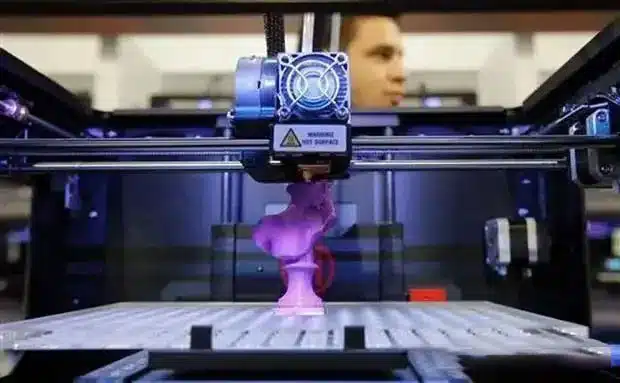
Fused deposition is also called filament deposition. It heats and melts the filamentary hot-melt material and squeezes it out through a nozzle with a fine nozzle. The nozzle can move along the X-axis direction, while the workbench moves along the Y-axis direction. If the temperature of the hot-melt material is always slightly higher than the solidification temperature, and the temperature of the molding part is slightly lower than the solidification temperature, then it can be ensured that the hot-melt material will fuse with the previous layer after it is ejected from the nozzle. After one layer is deposited, the workbench drops the thickness of one layer according to a predetermined increment, and then continues the melt-spray deposition until the entire solid modeling is completed. The specific process of the fused deposition manufacturing process is shown in the figure below:
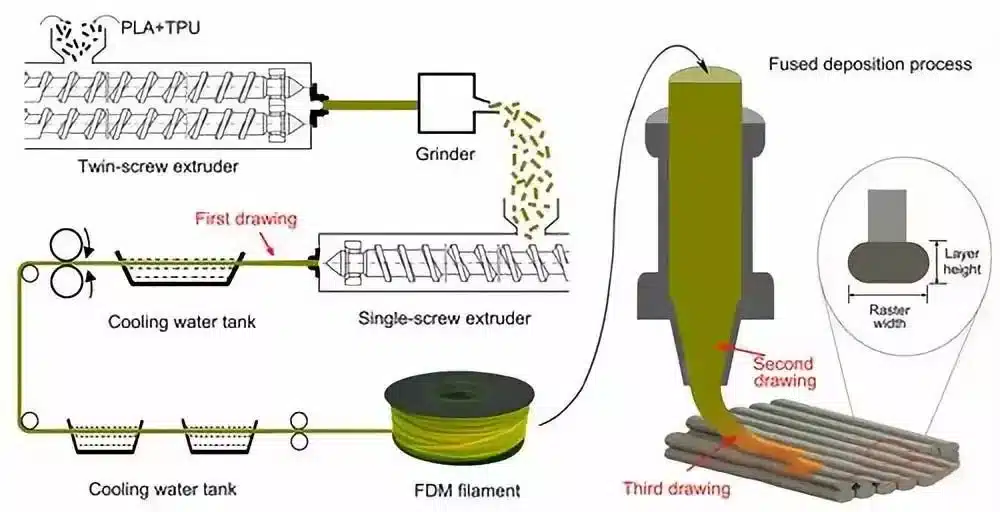
The solid wire raw material is wound on the feed rod, and the motor drives the rod to rotate. The friction between the roller and the wire feeds the wire to the outlet of the nozzle. There is a guide sleeve between the feed rod and the nozzle. The guide sleeve is made of low-friction material so that the wire can be smoothly and accurately mixed from the feed to the inner cavity of the nozzle (the maximum feeding speed is 10-25mm/s, and the recommended speed is 5-18mm/s). There is a resistance wire heater at the front end of the nozzle. Under its action, the wire is heated and melted (the melting temperature of investment casting wax wire is 74℃, the melting temperature of machining wax wire is 96℃, the melting temperature of polyolefin resin wire is 106℃, the melting temperature of polyamide wire is 155℃, and the melting temperature of ABS plastic wire is 270℃), and then passes through the outlet (the inner diameter is 0.25~1.32mm, depending on the type of material and feeding speed), coated on the workbench, and forms an interface profile after cooling. Due to structural limitations, the power of the heater cannot be too large, so the wire is generally a thermoplastic or wax with a low melting point. The layer thickness of the wire melt deposition varies with the movement speed of the nozzle (the maximum speed is 380 mm/s), and the layer thickness is usually 0.15 to 0.25 mm.
The fused deposition modeling process requires the simultaneous production of supports during prototyping. In order to save material costs and improve deposition efficiency, the new FDM equipment uses dual nozzles. One nozzle is used to deposit model materials, and the other nozzle is used to deposit support materials. Generally speaking, model material filaments are fine and costly, and the deposition efficiency is also low. Support material filaments are coarse and costly, and the deposition efficiency is also high. In addition to the advantages of dual nozzles, in addition to higher deposition efficiency and reduced model production costs during the deposition process, it also allows the flexibility to select support materials with special properties to facilitate the removal of support materials during post-processing, such as water-soluble materials, hot-melt materials below the melting point of model materials, etc.
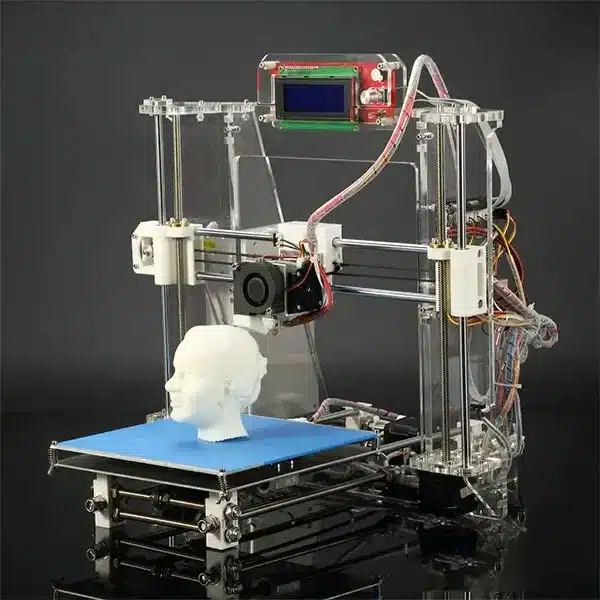
The main materials used in FDM 3D printing technology are ABS (Acylonitrile Butadiene Styrene, a copolymer of acrylonitrile, butadiene and styrene) and PLA (Polylactice Acid, a biodegradable plastic polylactic acid).
(1) ABS plastic
ABS plastic has excellent comprehensive properties, including excellent strength, flexibility, machinability, and higher temperature resistance. It is the preferred plastic for engineering machinery parts.
The disadvantage of ABS plastic is that it produces odor during the printing process, and due to the cold shrinkage of ABS, the model is easy to separate from the printing plate during the printing process.
(2) PLA plastic
PLA plastic is the most widely used material for desktop 3D printers. PLA plastic is a biodegradable material made from starch raw materials from renewable plant resources (such as corn).
2.Characteristics of fused deposition process
The advantages of FDM are high material utilization, a wide range of optional materials, and simple processes, but also higher molding accuracy, higher physical strength of the molded objects, and color molding. Its disadvantages are low precision, difficult manufacturing of complex components, cantilever parts need to be supported, and rough surface after molding. This process is suitable for product concept modeling and shape and function testing. Small and medium-sized prototypes of medium complexity are not suitable for manufacturing large parts.
(1) Advantages
1) The system construction principle and operation are simple, the maintenance cost is low, and the system operation is safe.
2) Non-toxic raw materials can be used and the equipment system can be installed and used in an office environment.
3) The prototype of the part molded with wax can be directly used for lost wax casting.
4) It can form parts of any complexity and is often used to form parts with very complex cavities, holes, etc.
5) The raw materials undergo no chemical changes during the molding process, and the warping deformation of the parts is small.
6) High raw material utilization rate and long material life.
7) The support is easy to remove, no chemical cleaning is required, and separation is easy.
(2) Disadvantages
1) There are obvious stripes on the surface of the molded part.
2) The strength along the direction perpendicular to the forming axis is relatively weak.
3) Support structures need to be designed and manufactured.
4) The entire cross section needs to be scanned and coated, and the molding time is long.
5) Raw materials are expensive.
| Comparison of FDM, SLA, and SLS in Characteristics and Process Methods | |||
| Comparison Item | FDM | SLA | SLS |
| Equipment Cost | ★★ | ||
| Operating Cost | ★★ | ||
| Maintenance Cost | ★★ | ||
| Ease of Operation | ★★ | ||
| Post-Processing | ★★ | ★ | |
| Space, Power, and Environmental Requirements | ★★ | ||
| Material Variety | ★ | ★★ | |
| Material Availability | ★★ | ★ | |
| Material Elasticity | ★★ | ||
| Material Strength | ★★ | ★ | ★ |
| Shear Resistance | ★★ | ||
| Tensile Resistance | ★★ | ||
| Build Speed | ★ | ★ | ★ |
| Production Capacity | ★ | ★ | ★ |
| Part Accuracy and Surface Finish | ★ | ★★ | ★ |
| Industrial Applications | ★ | ★ | ★ |
| Note: ★ indicates an advantage | |||
3.Pneumatic Fused Deposition Rapid Prototyping System
The working principle of the Air-pressure Jet Solidification (AJS) system is as follows: the low-viscosity material (such as a mixture of powder and binder) heated to a certain temperature is extruded by the nozzle under the pressure provided by the air compressor and coated on the working platform or the previous deposition layer. The nozzle scans and accumulates according to the layer geometry of the current layer to achieve layer-by-layer deposition and solidification. The workbench is controlled by the computer system to move in X, Y, and Z three-dimensional movements, and can manufacture three-dimensional entities layer by layer and directly manufacture spatial surfaces.
The AJS system is mainly composed of six parts: control, heating and cooling, extrusion, nozzle mechanism, lifting table and support mechanism. The control computer is equipped with CAD model slicing software and support software, which slices and diagnoses the three-dimensional model, and simulates and displays the contours of a series of cross sections at regular intervals in the height direction of the part. The support software automatically supports the part. After the data processing is completed, the mixed material is manually sent into the heating chamber in a certain proportion. The heating chamber is heated by a resistance wire, and the temperature is measured by a thermal resistor and the temperature is kept constant by a temperature controller, so that the material is in a good molten extrusion state, and then extruded after the pressure is measured by a pressure sensor to manufacture the prototype part. The control system can realize automatic control of the entire AJS system, including the on and off of the gas circuit, the spray speed of the nozzle, and the matching of the spray volume with the overall manufacturing speed of the prototype part.
4.Application of Fused Deposition Modeling Technology
FDM rapid prototyping technology has been widely used in the design and development process of automobiles, machinery, aerospace, home appliances, communications, electronics, construction, medicine, toys and other products, such as product appearance evaluation, solution selection, assembly inspection, functional testing, user sample ordering, plastic parts pre-mold verification design and small-scale product manufacturing, etc. It is also used in government, universities and research institutes. Complex product prototypes that take several weeks or months to manufacture using traditional methods can be completed quickly using FDM molding without any tools and molds.
(1) Application of FDM in Toyota, Japan
Toyota uses FDM technology to make the master molds of the right mirror bracket and four door handles. By using rapid mold technology to make products instead of traditional CNC mold making methods, the manufacturing cost of the 2000 Avalon model has been significantly reduced. The cost of the mold for the right mirror bracket has been reduced by 200,000 US dollars, and the cost of the mold for the four door handles has been reduced by 300,000 US dollars. The FDM process has saved Toyota about 2 million US dollars in car manufacturing.
(2) Application of FDM in American Rapid Prototyping Companies
Rapid Models & Prototypes, an American company engaged in model manufacturing, used FDM technology to make a toy water gun model for the manufacturer Laramie Toys. The toy water gun model was made with the help of FDM technology. By making multiple parts in one piece, the number of parts in the traditional model making method was reduced, and assembly links such as welding and threaded connection were avoided, which significantly improved the efficiency of model making.
(3) Application of FDM in Mizuno
Mizuno is the world’s largest comprehensive sporting goods manufacturer. In January 1997, it usually took Mizuno USA 13 months to develop a new set of golf clubs. The application of FDM greatly shortened this process. After the new golf head was designed and made with FDM, feedback could be quickly obtained and modified, which greatly accelerated the design verification in the modeling stage. Once the design was finalized, the ABS prototype finally made by FDM could be used as a processing benchmark for processing steel master molds on CNC machine tools. The entire development cycle of the new golf club was completed within 7 months, shortening the development time by more than 40%. At present, FDM rapid prototyping technology has become a decisive component of Mizumo USA in the product development process.
(4) Application of FDM in Hyundai Corporation of Korea
South Korea’s Hyundai Motor Company uses the FDM rapid prototyping system of Stratasys in the United States for design verification, aerodynamic evaluation and functional testing. The FDM system has been successfully applied in the design of Kia’s Spectra model. Tae Sun Byun, chief engineer of the automatic technology department of Hyundai Motor Company, said: Spatial accuracy and stability are crucial for design verification. The FDM Maxum system using ABS engineering plastics meets both requirements. The maximum error is only 0.75mm on a length of 1382mm.
In fact, in addition to its application in the automotive field mentioned in the above case, FDM technology is also widely used in other fields.